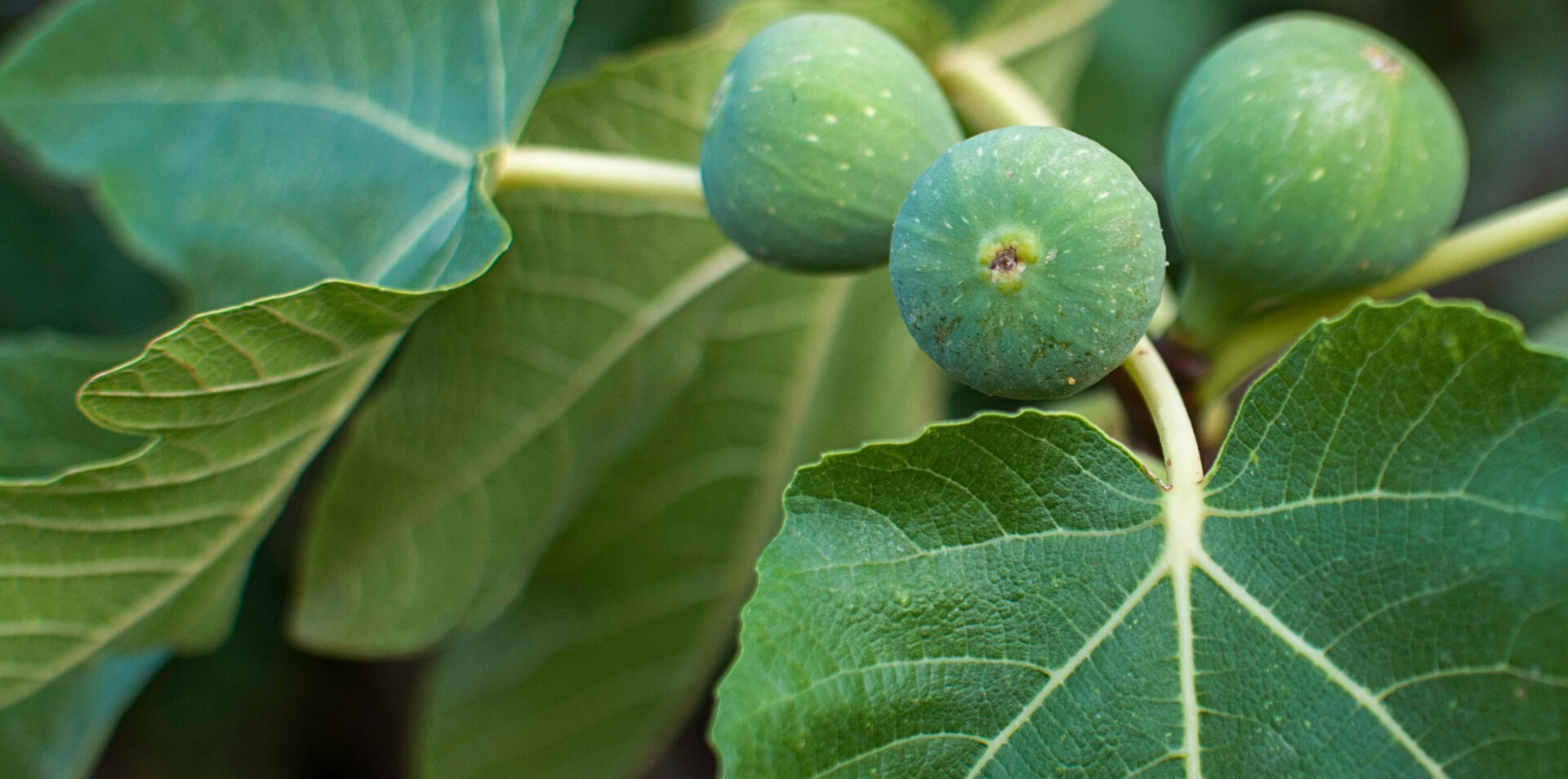
As servants of the Farmer of His Kingdom, we are to sow the seed. In God’s stock of seed, there are many varieties. They vary in their requirements for germination. God is a generous farmer and wants us to both enjoy His generosity as well as show it to others. When crops flourish, credit can be given to good seed falling on good ground while receiving rain from above and nutrients when needed. The harvest will produce fruit for the farmer as well as more servants to distribute more seeds liberally again.
When it comes to evangelism, one of the greatest challenges is patience. We do need to patiently wait while the other related germination requirements are in place until life sprouts. Maybe a look back at our elementary science classes and our first grasp of germination might help. Most of us have placed a seed, often a bean or some other that was quick-germinating, in the side of a jar held in place with a moistened paper towel. The result was not only an ecosystem for germination but an observatory. As a child, the observatory was as important as the ecosystem. Seeing is believing! If we couldn’t see this growing process, a life-threatening, premature excavation to prove the process may have been an unsurpassable temptation. If we kept the paper towel moist and at a reasonable temperature, we could see the results through the glass. Sight is needed at this maturity level, but there would be a famine in the world if this method was used to farm crops. Like faithful sowers, we must believe that each good seed will do what it was created to do. Different seeds will take different times to germinate, requiring short or long-term waiting periods.
A seed is a flowering plant’s unit of reproduction, capable of developing into another such plant. Being an embryonic plant enclosed in a protective outer covering called the seed coat, it has some stored food. All seeds need water, oxygen, proper temperature, and light in order to germinate. There are seed coats that are so hard they require soaking or scratching in order to be penetrated. While others, like apple seeds, will not germinate unless they exist in cold temperatures for a period of time. God knows what each type of seed needs to germinate, so if we patiently keep in step with the Holy Spirit, we will be a part of that process for all who will respond.
In John chapter one, Jesus was referred to as the Word. Jesus, in His explanation of the parable of the sower, says the seed is the Word of God, which is what we are encouraged to spread. If hearts are found to have suitable conditions, these seeds of Jesus will germinate and sprout into fruit-bearing trees, sustaining themselves and potentially feeding and seeding all those around them.
In Psalm 126:5, it states, “He who sows in tears will reap in joy.” We could find sowing to be emotionally straining, as the message of the gospel from its inception until today has brought adverse responses. Our tears may be generated from these two channels: those who did not respond yet and those we fear will not. Either of these sad scenarios should not prevent us from sowing the seed. When we stop sowing, the potential for harvest stops with it. Our tears may even be enough moisture to be the catalyst to germinate the seed sown if the conditions prevail. When the seeds fall on good ground, sprout, grow, and produce a good crop, there is no greater joy on earth and in heaven. Until the harvest, we need to work the ground and sow, believing that when the conditions are right, we or others will reap.
We can note here that no one is called to produce vegetation because vegetation doesn’t sow seeds. It is interesting to see that if a plant bears too much vegetation, the quality of the fruit and the number of seeds are affected. We like a fruit-bearing plant that will be pruned by the gardener. Extra vegetation on a fruit-bearing plant provides broader avenues for photosynthesis and valuable byproducts like oxygen, but this is not the goal of the farmer. These would be, in fact, the self-preservationist activity of any plant seeking to sustain itself and not concerned about the future of others. Sometimes, the gardener will leave unfruitful branches in our life temporarily with the hope for future fruit. These branches may be left to give balance to the tree both visually and functionally in the storms of life, but bearing much fruit is the goal of every branch.
Just the sight of a nice, big peach can cause me to salivate, much more so the hope of the flowing peach flavor. In the middle of the largest peach, we find a seed. The pit should not outweigh the peach, or I might as well eat a nut.
Meatless Seeds are “Nuts”
We were called to bear fruit. Mini science lesson: let’s talk about seeds, nuts, and fruit. While all nuts contain seeds, not all seeds are nuts; nuts are dry, hard-shelled fruits, whereas seeds are the plant structures capable of producing new plants. Some nuts are considered a fruit, composed of a hard shell and a seed, which is generally edible. Also, there is a shell that does not open to release the seed.
Have you ever been asked, “Are you nuts?!” “Crazy” may be more colloquial for some of you. Or, did you ever perceive that someone wanted to ask you that? Possibly, many Christians are to some “nuts,” though we are not called to produce nuts but fruit instead. In the spiritual sense, if you have had this question asked about yourself by someone not attuned to God, the answer may have been “yes.” First of all, we will probably always appear at least a little “nuts” to someone else if we are led by the Spirit. We will do things which to others and maybe to ourselves are not culturally or logically reconcilable. We are all unique and that causes us to fit together as God designed us to be. At times, there may be a missing link that would make the connection “normal.” Our lives may not pencil out for others to accept the bottom line, but that doesn’t make us “nuts.” It may be wise to consider the possibility of what might be producing anorexic fruit. If we are producing very small and shriveled fruit, there is so little there that it could be construed as nuts. What we produce does affect others and may be more than just taste preference.
Allegorically, the nuts which are considered to be fruit may resemble a person who has been given the gift of evangelism. They are obviously a believer, but their seeds are sown with less “insulation” than the average piece of fruit. Some nuts are exceptional fruit, but our goal should not be to produce nuts.
Some nuts can be eaten without processing, although others like the cashew need to be roasted in order not to be toxic for human consumption. Peanuts are seeds in the shell but are readily consumed outside of it. When a nut is opened, the shell is removed, and the kernel dries out completely, it has lost its ability to germinate; it is no longer a viable seed. Spiritually speaking, this loss of ability to propagate post-consumption may be one reason God used fruit and not nuts in His allegory for what we are supposed to produce. God in His word did not encourage us to go and bear many seeds, though He did encourage us to spread them. Fruit was the vehicle He desires us to utilize in order to spread the seed.
We are called to bear fruit and much of it. When fruit is picked and consumed, it does not lose its ability to propagate itself but instead increases it. Even when a fruit is ingested with the seeds, they may still be viable. Our fruit must have “meat” (KJV). The Word is the seed, and our good works are the flesh which entices others to either draw closer for a better look or ingest the seeds. I wonder what kind of fruit the tree of the knowledge of good and evil was? It is hard for me to picture it as a nut tree. Furthermore, I think God was wise to put seeds in the fruit.
Seedless Fruit is Crazy to God
It seems easier to understand passages relating to fruit by not referring to nuts. Defined: “A fruit is the mature, ripened ovary of a flowering plant that contains seeds, serving to protect them and aid in their dispersal. Botanically, it includes fleshy items (apples, berries), dry structures (nuts, grains), and savory items like tomatoes and cucumbers. Culturally, they are usually sweet, edible plant parts.”
If we are producing parthenocarpic or seedless fruit, we are definitely not nuts. We risk being ineffective for the kingdom and will probably develop a martyr complex thinking people are only associated with us because of what we can give them, which leaves us feeling spent, unappreciated, resentful, or superior. We can open doors for false humility leading to being proud of our good works rather than glorifying God through what we do or say. Let’s instead focus on what God wants to give them through us. I have been asked, “How do you avoid being used by others when you share the love of God through good works?” The answer is the gospel being in its proper place: your heart and therefore your speech (Matthew 12:34 NIV). Our heart is uniquely placed in the middle of our bodies, which is capable of doing good works that nicely depict seeded fruit. The challenge is to produce such good works that the gospel is at least tolerated, if not accepted. If someone rejects works which are like the meat of the fruit, either the good work will not be up to their standards, or their tolerance for the gospel is low. God provides the opportunities to serve others while we continue to offer the main ingredient for someone’s eternal life in Christ. Good works do not guarantee salvation, nor will it for anyone else. Then again, we need to make sure that we are not overloading our fruit with seeds (being too religious), since no one likes excessive seeds.
As much as we are not nuts, it would seem we would be crazy to produce seedless fruit. People can see our good works, but we don’t give the glory to God and share the gospel. Why not? Keeping quiet has no eternal possibilities and therefore will not last. God, through John, asks us to produce fruit and much of it, but also “fruit that will last.” The only hope that our fruit will last is if it contains both meat which can entice those to eat it for their benefit or joy and the seeds of eternal value which is the Word. If we want God to honor our efforts, we need to honor Him with our obedience. He asked us in Matthew 28:19-20 to make disciples of all nations which requires the gospel proclamation. Our works will end in earthly praise if they do not contain the offer of salvation for others which will bring more glory to God and Him rewarding us (1 Corinthians 3:14). Only our souls will be found in eternity with God. Therefore, by your seeded works, unbelievers who accept this eternal offer, you will be eternally rewarded.
The production of good fruit requires the tree to supply life-providing nutrients and water. The tree must bear its burden until it entices someone to lighten its load because the picker sees benefit for themselves or others. If the fruit produced is seedless, the hope of life for the tree ends in that season’s consumption. If it is producing good-looking and tasty fruit with seeds, that tree has hope not just in the next year’s crop but also in the sprouting seeds which will outlive its own productivity.
Reflections on The Seed of the Word
What is your understanding of the Word of God as a seed that we have a responsibility to spread?
Do you spread the Word of God to those in your natural path of life?
Matthew 28:19-20 ~ In this passage, do you think God is calling us to do work for His Kingdom? If so, please list three examples of what this would look like:
1.
2.
3.
1 Corinthians 3:14 ~ Does this verse motivate you to obey? Why or why not?
Psalm 126:5, “He who sows in tears will reap in joy,” is referring to your emotions in ministry. Why would you be crying as you obey the Lord?
Author: Wilf Scheuermann, excerpt from the transcript God’s Grade ©2015, Revisions ©2026; Photo by Antonio Lorenzana Bermejo: https://www.pexels.com/photo/close-up-of-unripe-figs-on-a-tree-branch-14342643/